
Dementia Action Week
From Monday 18 May to Sunday 24 May, we are proud to support Dementia Action Week 2026 - an awareness campaign led by the Alzheimer’s Society and backed by organisations across the UK. The week aims to inspire people to take action on dementia and help improve the lives of those affected.
This year’s campaign focuses on encouraging everyone to take part in the Forget Me Not Appeal. Behind every Forget Me Not badge are stories of lives impacted by dementia. When we wear the badge together, it becomes more than a symbol - it represents hope, action and unity. A powerful reminder that it will take all of us, as a society, to beat dementia.
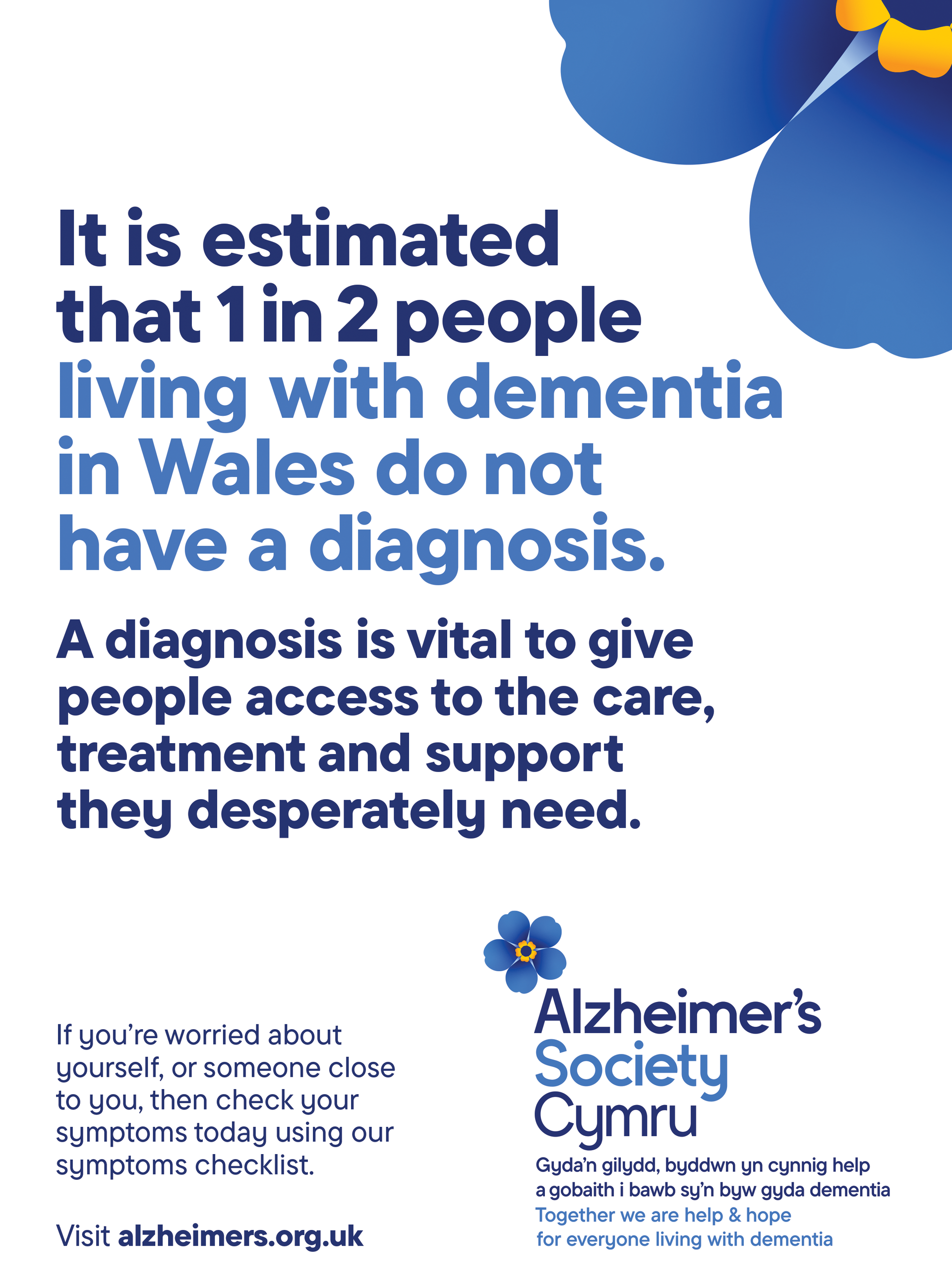
Shockingly, up to one in two people living with dementia in Wales do not currently have a formal diagnosis - despite 91% of those affected recognising the significant benefits of receiving one. Taking part in the campaign can raise vital awareness and encourage peope to seek a diagnosis.
Dementia is not a single disease but a term used to describe a group of symptoms caused by different diseases that damage the brain. These symptoms progressively worsen over time and can include memory loss, confusion and difficulty with daily tasks, problems with language and understanding, and changes in behaviour. Dementia is progressive, meaning that symptoms may start off mild but become more severe over time. There are various types of dementia, with Alzheimer’s disease being the most common, followed by vascular dementia.
Dementia is not a natural part of ageing. It occurs when diseases damage the nerve cells in the brain, disrupting the messages that nerve cells send to different parts of the brain and body. As more nerve cells are damaged, brain function declines. Many diseases can cause dementia, each affecting the brain differently and resulting in various types of dementia. Understanding these causes can help us better support individuals living with the condition.
Currently, around nine hundred thousand people in the UK are living with dementia. Although it primarily affects individuals over the age of sixty-five, it can also impact younger people. One in fourteen people over sixty-five has dementia, and this increases to one in six for those over eighty. Dementia can also affect younger individuals, often referred to as young-onset dementia. Approximately one in twenty people with dementia are under sixty-five, with over seventy thousand eight hundred individuals in the UK living with this condition.
By supporting this year’s campaign, you can help raise awareness of the importance of timely and accurate dementia diagnoses. Early diagnosis can significantly improve the quality of life for people living with dementia and their families. For more information and to find out how you can get involved, click the campaign button below.